Posts tagged: weddings

Just because the weather is crap…

By , August 12, 2011 12:34 pm

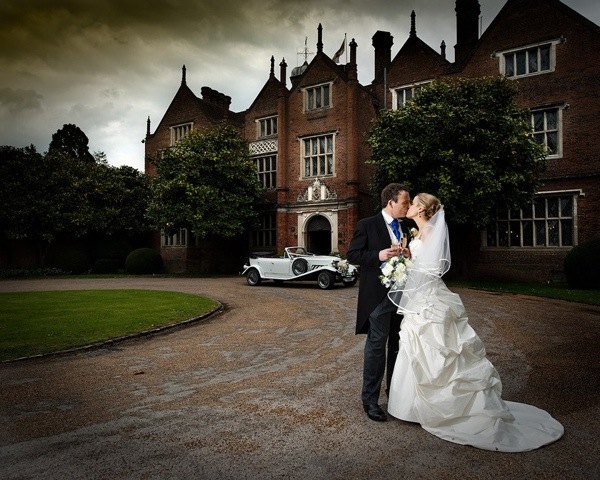
… it doesn’t mean that your wedding photos have to be boring. In fact, far from it. The dark and dramatic skies can allow you to create imagery that would not otherwise be possible with the clear blue skies that all brides and groom hope for (and at the moment, very few seem to get!).


Mollie with brooding skies.

Mollie strikes a pose in front of the shattered remains of a once huge tree, while skies threaten behind. Photo: © Michael Cockerham 2011

Last week I had a wonderful couple, Alex and Mollie. They were lucky. Despite the best efforts of the weather, and horrendous problems with traffic thanks to the M25 being closed for hours on end, they still had a wonderful day. I for one was delighted to be there with them.

The threat to the monarchy

By , April 29, 2011 9:26 pm

All the recent polls suggest that around eighty per cent of the population are in favour of the monarchy, and certainly the reporting today appears to support that. The naysayers, on the other hand, are quick to point out that it is an anachronism, that it is unaccountable, that it is patently unfair for a person to gain such advantage purely through accident of birth.

So what can we learn on a day when all the world has turned to gaze upon the theatre of William and Catherine’s wedding? We learn that we do pagentry well because actually the whole institution of monarchy underpins everything we understand about ourselves in Britain; it is the foundation of our society. For all its failings, it has given us a remarkably stable and peaceful form of society, one that is by and large the envy of nations the world over.

Camden Grove street party. April 29, 2011. Photo © Michael Cockerham

Camden Grove street party. April 29, 2011. Photo © Michael Cockerham

Elizabeth II has been head of state for longer than anyone anywhere in the world, sixty years next year. Yet in all that time she has barely put a foot wrong, not something you can accuse most politicians of for 60 minutes let alone 60 years. The less charitable would say it was simple luck, but the truth is the Queen is driven by a profound sense of service. Yes, her’s is a position of extreme priviledge, but it is also one of stultifying restriction. Nevertheless Elizabeth has stayed true to the course of loyal duty and service. We might be her subjects, but it is she that serves us with unswerving dedication. That devotion to service is the high price she must pay for her privilege, and I have no doubt that she instills that sense of purpose and duty in her close family.

Think about it; from the moment you are born, your life is mapped. You have no choice in the matter. None. From the moment William was old enough to understand he knew that he was to be king, as did his father. At least Elizabeth began life with no such expectation; even so, at the age of ten, her fate was sealed because of Edward VIII’s abdication. For these royal children there was and is none of the opportunity to imagine what you might be when you grow up. How is that fair?

Bunting in the central aisle of Asda, Swanley. Only the prices seem to have changed in a scene out of the 70s. April 29, 2011. Photo © Michael Cockerham

Bunting in the central aisle of Asda, Swanley. Only the prices seem to have changed in a scene out of the 70s. April 29, 2011. Photo © Michael Cockerham

When Edward VIII chose love over service it caused a constitutional crisis, and one wonders if it would survive such an event again. The support shown today for the renewal of the royal family that arises out of the marriage of William and Kate and their creation as Duke and Duchess of Cambridge indicates that Britain wants it to work. There is a palpable hope that the institution of monarchy can be renewing, can be relevant, can continue to be a cornerstone of our society.

The trappings of royalty may be responsible for the detail of events like today’s, but the spectacular itself is a function of the dynamic of monarchy. A republic has to happen according to timetable, but the events of monarchy are determined by life itself: the weddings, the funerals, the coronations. Many may come at once, then nothing for a generation. The flux of their lives mirrors that of ours, and that is what gives the perception of solidity and continuity. While prime ministers come and go, and one crisis is replaced by another, the monarchy is there as a focal point for society to measure itself by.

Children at Hextable Primary School have a "Street Party" in honour of the Royal Wedding. April 28, 2011. Photo © Michael Cockerham

Children at Hextable Primary School have a "Street Party" in honour of the Royal Wedding. April 28, 2011. Photo © Michael Cockerham

So what is the threat to the monarchy from the republican opposition? Nothing of significance. The real threat comes from an heir apparent standing up for his or her inalienable right to determine their own future; a compelling case could be made at the European Court of Human Rights that being born the heir apparent is a form of slavery which is unlawful.

I started by recalling the cry of those anti-monarchists that it is unfair for a person to gain such advantage purely through an accident of birth. But we are all born into advantage or disadvantage. In a very real sense the accident of being born British is to be born into advantage that the vast majority of the world’s population can only dream of. It is not fair, and many are minded to do all they can to redress the imbalance of plenty and poverty. William, like Charles before him, has been born into advantage, but also into a closeted duty the rest of us can barely begin to imagine.

Camden Grove, Chislehurst. Only the alarm bell boxes and the parkign restriction sign put this image in the 21st century. April 29, 2011. Photo © Michael Cockerham

Camden Grove, Chislehurst. Only the alarm bell boxes and the parking restriction sign put this image in the 21st century. April 29, 2011. Photo © Michael Cockerham

In the end, far from the monarchy existing because we the people allow it to continue, the monarchy continues for as long as those born into that destiny see fit to put duty and service ahead of personal freedom. The threat to the monarchy is greatest within the institution itself. It serves us well, and it is right that we use occasions like today’s to celebrate and maintain it.

Time for some more What The Duck

By , February 26, 2011 1:02 pm
What the duck go with the flow

Go with the flow. © Aaron Johnson 2011

Turning up the heat

By , September 5, 2010 3:28 pm

It’s great when a couple are game for a laugh. Emily and Simon, the bride and groom from a wedding I shot last week are a case in point. With the weather offering rain, rain, and more rain, I wanted to try to find something alternative for them as a hook for their album, and asked them if they fancied a stint in the sauna… fully dressed. They were keen to give it a go, and yes it was switched on – I was sweating like a pig and I wasn’t even in it!

Wedding photography heats up

Simon and Emily get steamy on the wedding day

So, you want to be a wedding photographer?

By , September 1, 2010 1:44 pm

Just came across this amusing – if a little cringe-making – piece on YouTube. If you are thinking that you should venture into wedding photography because you just bought yourself a DSLR, then it might be worth watching this first!

Television exposure

By , November 3, 2009 12:33 pm

You’ll have to excuse the dreadful pun in the title for this news item – all will become clear.

Popular Channel 4 show hosted by Gok Wan

Popular Channel 4 show hosted by Gok Wan

Last year I was commissioned to photograph the wedding of Kelly and Toby – nothing unusual in that. But it was brought to my attention that the bride to be, Kelly, had recently recovered from breast cancer, and following a mastectomy had had her confidence shot to pieces and her life – and wedding – put on hold.

Then along came the inimitable Gok Wan, and the television show How To Look Good Naked. Kelly says that participation in the show changed her life, gave her back her self esteem and confidence, and enabled her to get married.

Despite Channel 4’s offer to film her wedding, Kelly wanted to keep it a personal family and friends affair, and she and her betrothed employed me to do the official photography.

The Gok Wan addicts among you will know that the series is on again, and tonight they are airing a “revisit” show of Kelly that will see where her life has gone since Gok swept his broom through her wardrobe. In particular he is going to rib her for not wearing the wedding dress he bought her as part of the original show, and several of my photographs showing how she actually looked on her wedding day will be aired (apparently I will get a credit at the end of the programme).

Kelly Short on her wedding day.

Kelly Short on her wedding day.

Anyway, Kelly has become something of an ambassador for a leading breast cancer charity and is keen to raise awareness and support in equal measure. The dress she was given by Gok is to be auctioned off on eBay immediately after the show airs and you can find it at: eBay Gok’s Dress. Alternatively, if you are interested in making a simple donation you can visit Kelly’s special donations site.

For my own part, I took the decision that the programme credit and a link from the How To Look Good Naked website to my official site is reward enough, and I am donating the reproduction fees from the use of the images to a breast cancer charity.

Don’t forget to watch!!! Channel 4, 8pm, November 3rd, 2009

EDIT: If you missed the show you can watch it online and find out more here.

The Big Day

By , October 8, 2009 2:03 pm

A wonderful, if cautionary, tale was posted today on the BBC News Magazine pages about the hazards of inept wedding photographers, and it is well worth a read for aspiring photographers and prospective couples alike.

Ever since the digital revolution there has been this misconception that everything is easier (and quicker and cheaper) than it used to be in the days of film. This article seems a good point to set a few things straight.

Let’s start with the “easier” part. In the old days – by which I mean pre-digital – most people accepted their limitations as photographers. It was not uncommon for people to have photos from their summer holiday on one roll of film sandwiched between Christmas pictures at the start and end of the roll. Even the more snap happy did not kid themselves over their talent or lack thereof, because when they picked their photos up from the processor they usually found they had a couple of good(ish) photos, with thirty odd that went straight in the bin. Thus it was that “real” photographers were seen to be performing some kind of alchemy, producing excellent work from one end of the film to the other in seemingly impossible conditions. By and large wedding practitioners were shooting on Hasselblads or Rolleiflexes (my preferred medium format kit) – cameras that the average Joe never saw let alone knew what to do with. As a result, when people got married, they expected to use professionals to get the pictures. Don’t get me wrong, there were some really dreadful photographers around, but the proportion was rather lower than I expect it is now.

Then came the revolution. The average Joe could see what he was shooting instantly, and as he scrolls through the images he has on the back of his camera anyone would think he had talent. The problem is, that while we wince at the cost of throwing away prints from negatives, deleting files has no effect on us. Most people changing from film to digital have got no better – their hit rate is much the same, deleting thirty something pictures for every couple they keep. The simple fact is, whether someone is shooting on film or a chip, they still have to understand the effects of shutter speed and aperture, sensitivity and light, focus and composition, lens choice and – most importantly of all – subject. A good photographer will take good photos even with dreadful equipment. A bad photographer will produce crap no matter how expensive their kit. And that is not all. One of the ironies of “easier” digital is that it is actually less forgiving of mistakes than film was. With film (negative, less the pedants point to the unforgiving nature of transparency) your exposure could be off by a stop and a half in either direction and you could still get an acceptable print. With digital, overexposure is a real problem to recover from, and shadows can block up pretty quickly too, although to be fair the dynamic range of the latest generation of digital SLRs is much better than it was. How much of a problem is this for the unsuspecting “wedding photographer”? Well, imagine photographing the wedding of a very pale skinned man from Dundee in a black morning coat to a deep black skinned woman in a white dress on a bright sunny (I’m talking 500th at f8) day. You have to get detail in everything – it’s no good telling the bride and groom that it was too sunny, they want to see their faces and the detail in what they are wearing. If you are not bang on with the exposure you might as well forget it.

Then comes the “quicker” bit. In the old days (sorry, I sound like Uncle Albert in Only Fools!) at the end of a wedding you could drop the film in to your chosen professional lab (important to qualify “professional” – the people working in them are highly skilled technicians rather than school leavers who have been told which buttons to press). The best ones would stagger the process with other photographers’ work, that way if something went wrong chances were that you would lose a few shots rather than loads. A couple of days later you picked up the negs and the proofs, marked them up, filed the negs, and waited for the happy couple to get back from the honeymoon. Now we have “post-production”.

The average punter tends to be a bit bemused by this, after all they take pictures and just look at them on their computer. The explanation, sadly, is not straight forward.

Unprocessed image

Unprocessed image

In essence consumer cameras process the image files to make them instantly pleasing to look at, while professional spec cameras do not, the reason being that the cameras are designed to give the user as much leeway as possible to produce the right results for the right output. For instance, a picture that has been optimised for a computer, and is only ever going to be looked at on a computer, looks dreadful if it is printed, and a file that is great for a big print, is way too big for use online. The adjustments that need to be made for each type of use are not the same, so there cannot be a one size fits all approach to processing the pictures in camera. The majority of good photographers shoot RAW files rather than JPEGs. That is, the camera saves all of the raw data from the image that falls on the sensor. These files tend to be flat, lifeless and soft, and bear little relationship to the view that the photographer sought to capture. In a very real sense the move to a RAW work flow has taken professional photography back to the days of negatives, where (to paraphrase the great Ansel Adams) the original file is akin to a musical score, and the final JPEG is the performance. Unlike the film days, though, the post-production can’t just be handed over to a lab – well it can, but wedding customers are unlikely to want to bear the cost. As a result it falls on the photographer to do it him or herself, and this can easily be another day on top of the wedding: the one day’s work of old just became two for no additional money.

post processed image

post processed image

Just to be clear, post-production in this context does not mean “photoshopping” – that is, to add and subtract bits from the picture – rather it is about balancing the colours, getting the contrast right and fine tuning the exposure – exactly the kinds of things that labs did with film. Once the basic post-production and editing (taking out the images where people are blinking etc) is done, the files can be converted to JPEGS to create proofs, either physical, or (more commonly these days) online. But the work does not stop there. Each file needs to have a distinct file name (no good having the generic file name DSC_1025 on 17 different shoots, you’ll never find what you are looking for again!), and the original RAWS need to be backed up several times, preferably in different geographical locations. Why? Well, in short, hard drives fail; not so much a matter of if but when. Furthermore, computers are likely targets for thieves, so having things in different locations is a fail safe against losing all your work. With negatives the only real risk was from fire or water damage; to the best of my knowledge they never had the habit of suddenly not working – unless of course they were not properly fixed, but that’s why you didn’t get them processed at the chemist.

That brings us to “cheaper”. The simple fact is that the saving on film is minuscule, especially set against the expense of the equipment required. A pro-spec film camera would have set you back about £1500, and they tended to last for five to ten years provided they were maintained. It is worth noting that Nikon only ever released 6 professional camera bodies, and look at the dates of their going to market, and then compare this to the release dates of their digital bodies:

FILM BODIES                                                    DIGITAL BODIES

  • Nikon F     1959                                              Nikon D1     June 1999
  • Nikon F2   1971                                              Nikon D1x  February 2001
  • Nikon F3   1980                                              Nikon D2x  September 2004
  • Nikon F4   1988                                              Nikon D3x  December 2008
  • Nikon F5    1996
  • Nikon F6    2004

In essence they were releasing a new camera to market at the rate one a decade (compared with four digital bodies in under ten years), and the last one, the F6 (still available) came as a complete shock since no one thought Nikon would bother releasing a new design well after the digital revolution. With digital bodies though, the pace of change has been breathtaking, with pro-spec bodies costing around £3500 and needing updating every couple of years. Over a ten year period film cameras would have cost £3000, while digital bodies will set you back about £14000. Before you say that you can buy a DSLR for £300, remember that if you are doing this for a living you will likely be shooting over a hundred thousand frames a year; the cheap bodies just can’t cope, and your wedding customers won’t be pleased if your kit stops functioning because you were too cheap to get the right stuff – that reminds me, you do need to have at least two cameras, just in case one packs up on a shoot… don’t say it won’t happen: it will. Then there are the lenses, the flashguns, the spare flashguns, the memory cards, the batteries and chargers, the tripods, the bags (believe me, they aren’t cheap). Once you have shot all your images, you need to be able to process them on a computer, and the first time you try to deal with a 30Mb to 50Mb file on an insufficiently powered machine you’ll be beating a track to the shops to spend a fortune on something more powerful that can cope with processing four or five hundred such files at a a time. And remember my warning on storage and back up? Much more expensive than filing negs.

So that’s the cost of the equipment dealt with. Then there is professional insurance (which I bet the subject of the BBC story wishes he had) at about a thousand pounds a year, and don’t forget to factor in the time for all the meetings with the customer before and after the wedding, and the time required to do the layouts and revisions for their storybook. All told you can be looking at five days in total on one couple. With the cost of the book production at about £350, the depreciation of the equipment plus other overheads, a photographer charging £1500 for a wedding might be getting about £120 a day – not quite as extortionate as the headline rate would have you believe, and even that assumes they are shooting 52 weddings a year and most are not.

The reality is that traditionally wedding photographers made their living from print sales. The pictures would be so good (hopefully) that relatives and friends of the couple would order a few prints each. The widespread use of compact cameras knocked that in the 1990s, so the best photographers had to up their game and get pictures that were so much better than everyone else’s that they still had good sales. The crap photographers just made demands that no one else was allowed to use cameras at the weddings they were working on. I have heard of this so many times, and it still makes me shake my head with disbelief. The question you have to ask is: how much confidence have such photographers got in their own ability if they can’t stand the competition from people who have no idea what they are doing? Personally I have no problem with guests taking pictures at weddings I work on, in fact I often give them tips on how to take better pictures.

The real threat to print sales has not been guests with cameras, but rather the editors of bridal magazines recommending that couples ask (or demand) that photographers “give them a DVD with all the pictures on”. Why? They never recommended that photographers give the couple the negatives, but for some reason they think the democratising effect of the PC makes handing over your work perfectly legitimate. The day I had a the editor of a bridal magazine ask me to supply one of my images for the cover of her magazine (she cold called me) while informing me that she would not be paying me and I had to take out a four month advertising contract with them was the day they lost all my respect. Personally I would like to string the lot of them up, and if you think I am being petulant consider what the publishers’ response would be if prospective brides asked to be given copies of the magazine (rather than paying for them) using the argument, “well you have already written it and printed it, so what use is it to you now?” Rightly the response would be that it is copyright material, and if people want it they have to pay for it. So it should go for wedding photos. Any photographer who values their work should offer to supply a disc for a rate commensurate with the average sales that they would expect to get for a given wedding; if that is a thousand pounds, then the price of a disc should be in that region. If your photographer offers you the disc for nothing what does that tell you about how much they value their work?

The thing is, many photographers might consider the effect on sales of giving a disc (and I am not even talking about copyright, that’s a whole other issue), but very few seem to think about the effect on their credibility. Consider this:

You spend a fortune on equipment; you strive to produce the best photos you can; you toil over colour and density correcting all the files, and making sure the unsharp masking is just right; you hand over a disc of perfect files in a recognised colour space; the couple put them in their computer; the monitor is not calibrated and profiled, so they fiddle to make them look right; they print them on cheap paper with cheap inks with no colour management or profile, but plenty of banding and colour casts; they then show these to everyone they know as examples of YOUR work. What does that do for your reputation? One of those friends was thinking about getting in touch with you to shoot their wedding… not anymore they’re not!

Bruce and Claire - Royal Observatory, Greenwich.

Bruce and Claire - Royal Observatory, Greenwich.

One correspondent to the BBC article – Caroline from Winchester – said: “Your mates know how to take your best picture.” I disagree. Your mates know what is you and what isn’t, but they do not necessarily know how to take a good picture of you. Virtually every wedding I do there will be someone who puts on a mock display of not wanting their photo taken: “I look terrible in photographs,” they say. If Caroline was right no one would ever say that. Eventually I get them to give me two seconds of their time, and the response is always the same: “that’s reeeally nice!” Why are they surprised? If you only ever had your hair cut by your mates (assuming they are not all hair dressers) you would soon come to the conclusion that it was impossible for your hair to be cut nicely. Likewise since most people’s experience of having their photograph taken is by their mates, they labour under the misapprehension that they are not photogenic.

Ultimately a good wedding photographer needs to be at the top of their game. There is a huge amount to do in a very short space of time, and unlike virtually every other area of photography, there are no second chances. There are many top flight photographers working in different genres that don’t do weddings. Some claim that it is beneath them, others – possibly more honestly – don’t want the responsibility.

Photography is only a small part of what is involved. Most of it is being able to get a large group of people to do what you want and enjoy it – part drill sergeant, part stand-up comic. You have to be patient, but firm. You have to know when to take control and when to let people enjoy their day. I have a rule of thumb: while I might want to take the best photographs I can, it has to take second place to the couple having the best possible wedding day. A few years ago I was shooting a wedding when my camera informed me that it had formatted everything I had shot up to that point. It has the greatest laxative effect of anything I have ever known! But this is where professionalism and experience come to the fore. My options were either to have a fit, start swearing madly and tell the couple they would have to repeat everything; or hide my terror, take stock of where I was, figure out what I could re-shoot without alerting anyone that anything was amiss, and try to carry on as normal. The first option ensures that no one ever hires you again, the second ensures that the couple continue to have a dream wedding and if worse comes to worse you deal with the consequences on another day. As it happens by about two o’clock the following morning I had become something of an expert in forensic data retrieval, and all was recovered – the couple had no idea anything was ever amiss.

So the answer to the BBC’s question, how hard is it to photograph a wedding? Harder than simply pressing a button might make you think.

Panorama theme by Themocracy